
For collections that deserve a close look
Stamps, coins, watch movements, jewellery: collecting fields in which details determine value – a watermark, a mint mark, a hallmark, a perforation.
The basics of lens strength are covered in detail in Focal length, magnification and working distance and in Which diopter suits you? – this article is about what makes this particular application special.
What collectors need
- Colour-true light – with stamps and coins the shade often decides the attribution. High colour rendering from Ra 90 upwards shows colours as they are.
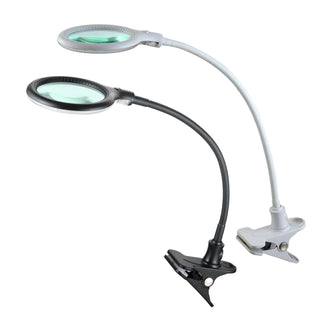
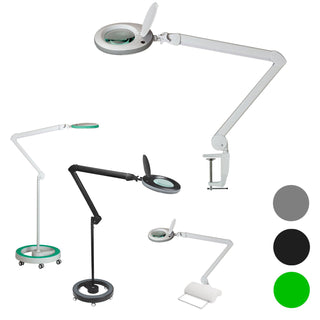
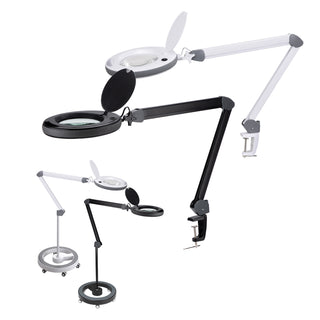
- Suitability for raking light – embossing and relief stand out when the light falls at a shallow angle. A swivelling articulated arm makes that possible.
- Both hands free – to hold tweezers and object at the same time
- Glass lens – scratch-resistant and free of distortion, even after years
Which strength?
For going through a collection, 3 to 5 diopters is usually enough – you keep the whole object in view. For detailed examination of perforation, hallmark or engraving, 8 diopters is the right choice. Many collectors have both: a lamp at the desk and a hand magnifier for outings.
For watchmakers and goldsmiths
In craft use, what counts above all is that the lamp stays where you put it and that it can be swung aside quickly. An articulated arm with sufficient spring force is superior to a stand tube here.
Frequently asked questions
Does LED light harm sensitive objects?
Compared with incandescent bulbs, LEDs emit far less heat and practically no UV light – with paper, pigments and textiles that is the gentler route. Even so, light-sensitive objects should not be illuminated permanently.
Can I photograph underneath the lamp?
For documentation shots that works well, because the illumination is even and largely free of shadows. Choose a version with high colour rendering so that the photograph gets the shade right.

0 comments